
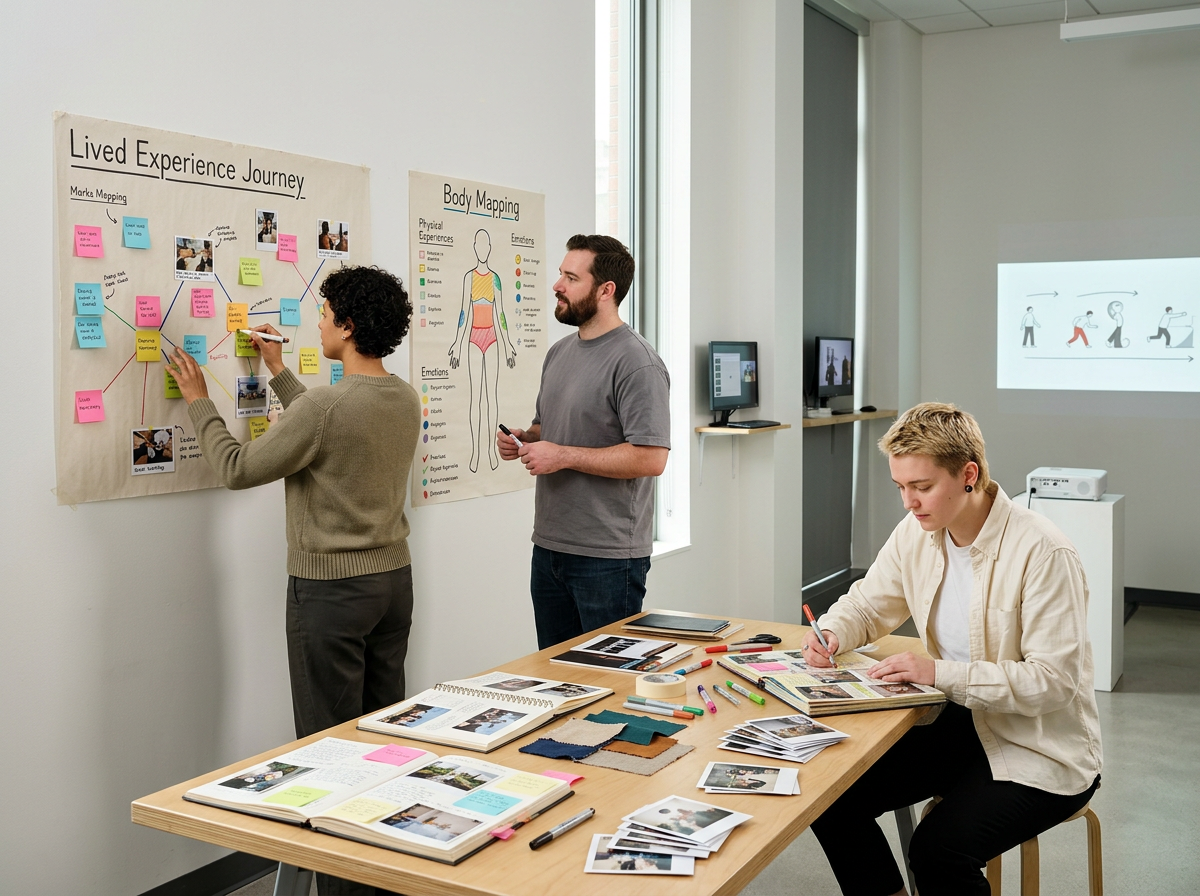
What is creative research in psychology?: more than just words
What if someone has something important to tell us, but words aren't the best way for them to tell it?
Creative research in psychology gives people different ways to share their experiences — through photographs, drawings, objects, maps, timelines, poetry, storytelling, collage and many other approaches. It isn't about being good at art, and it isn't about making research less scientific. It is about recognising that people think, remember and communicate in different ways. Research suggests that arts-based approaches can help us access aspects of human experience that might otherwise remain difficult to express. As researchers Barone and Eisner put it, arts-based research can help us “express meanings that otherwise would be ineffable” — in other words, communicate things that can be incredibly difficult to put into words.
Over the coming weeks, I'll be taking one creative research method at a time and making it simple:
What is it?
Why use it?
Who might it include?
What should we be careful about?
And what are my Top 5 Tips for using it?
We'll explore methods including Body Mapping, Photovoice, Collage, Lived Experience Journey Mapping, LEGO® and object-based methods, poetry, digital storytelling and more.
Because sometimes better research doesn't start with finding a better question.
Sometimes it starts by giving people a different way to answer.